
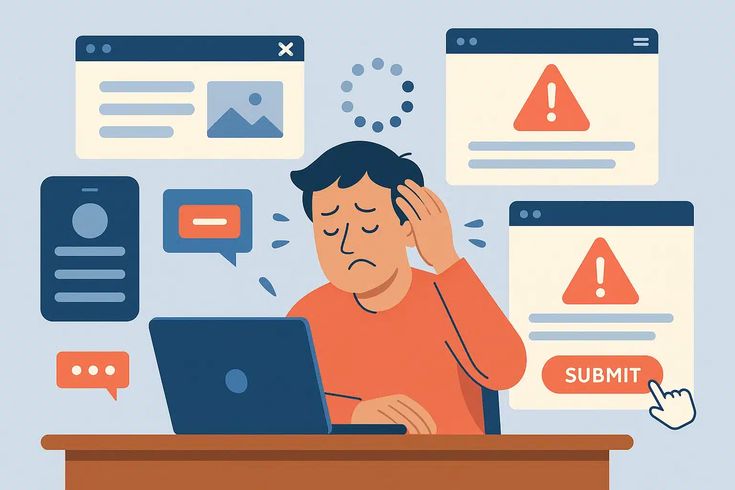
Your website can be your brand’s strongest asset or its biggest weakness. It has the power to attract customers, build credibility, and drive sales or quietly push visitors away before they even understand what you offer. Too many businesses focus on making their site look good and forget to make it work well. They skip strategy, overlook user experience, or ignore SEO and end up with a beautiful website that fails to deliver results.
Your website should do more than exist online; it should communicate clearly, convert consistently, and represent your brand with confidence.
In this article, we will explore five most common mistakes businesses make when building their websites and how to avoid them so your site becomes a true growth engine for your business.
Common Website Mistakes Businesses Make
1. Poor Website Navigation
Your website’s navigation acts as a roadmap for visitors. If users can’t find what they’re looking for within seconds, they’re likely to leave. Many websites overwhelm visitors with too many menu options, hidden links, or inconsistent structure. This confusion frustrates users and drives up your bounce rate. Remember, simplicity in navigation builds trust, it shows professionalism and makes your site feel organized.
2. Ignoring Mobile Optimization
With most web traffic now coming from mobile devices, failing to optimize your website for smaller screens is a costly mistake. A site that doesn’t adapt well to mobile makes text unreadable, buttons too small to tap, and layouts distorted. When users have to zoom or scroll endlessly, they won’t stick around. Google also prioritizes mobile-friendly sites in search rankings, meaning poor optimization can hurt both your user experience and visibility.
3. Neglecting SEO (Search Engine Optimization)
A stunning website means little if no one can find it. Ignoring SEO during development is one of the most common and damaging mistakes businesses make. Without keyword research, proper meta descriptions, optimized images, and structured headings, your site becomes invisible to search engines. As a result, even if you have great content or products, your audience may never discover them.
4. Weak or Generic Content
Your website content tells your brand’s story and builds trust with visitors. Yet many businesses rely on vague, outdated, or copied text that doesn’t reflect their true value. Generic messaging can make your business blend into the crowd, while unclear language confuses potential customers. Great content should inform, engage, and inspire action not just fill space on a page.
5. No Clear Call to Action (CTA)
Every page on your website should have a purpose. But too often, businesses forget to guide visitors toward a next step. Without clear CTAs, visitors might read about your services but leave without taking action. A missing or weak call to action can drastically reduce conversions, no matter how appealing your offer is.
How to Avoid These Website Mistakes
1. Simplify Your Navigation
Plan your website’s structure before building it. Group related pages under clear categories and keep your main menu simple. Use intuitive labels like “Services,” “About,” and “Contact” instead of creative terms that confuse users. Always ensure your navigation is consistent across all pages, and test it from a visitor’s perspective, not just your own.
2. Prioritize Mobile Optimization
Adopt a mobile-first design approach. Test how your website looks and functions on various devices before launch. Compress images for faster load times, use larger buttons for easy tapping, and ensure text is readable without zooming. A responsive design not only improves user experience but also strengthens your SEO performance.
3. Incorporate SEO From the Start
Think about SEO as part of your web design process, not an afterthought. Use relevant keywords naturally throughout your pages, write descriptive meta titles and tags, and ensure your URLs are clean and readable. Add internal links to connect your content and regularly update your site with fresh, valuable information. This helps your website stay visible and competitive in search results.
4. Write Authentic, Engaging Content
Focus on creating content that speaks directly to your audience’s needs. Highlight what makes your business different, answer common questions, and use storytelling to build a connection. Keep your tone conversational and professional, and update your website regularly to reflect new services, achievements, or customer testimonials.
5. Add Clear and Strategic CTAs
Don’t assume visitors know what to do next, tell them. Place CTAs strategically on every page, using strong action verbs and contrasting colors to make them stand out. Whether it’s “Get a Quote,” “Schedule a Consultation,” or “Learn More,” your CTA should feel natural and valuable to the visitor. Test different versions to see which ones drive the most engagement.
Final Thoughts
Your website isn’t just a digital presence, it’s a powerful marketing tool that can elevate or limit your brand’s success. Avoiding these mistakes ensures your site not only looks professional but also attracts, engages, and converts visitors effectively.
A high-performing website blends smart design, valuable content, and strategic functionality. When built with these principles in mind, it becomes one of your business’s strongest assets.
Ready to build a website that works as hard as you do?
Your website should be more than a digital space, it should be a growth tool that works for your business every day. If yours isn’t performing the way it should, now’s the time to fix it.
At GoCreative, we design high-performing, SEO-optimized websites that help businesses grow, convert, and stand out online
Frequently Asked Questions (FAQ)
1. What makes a good business website?
A good business website is clear, easy to navigate, mobile-friendly, and optimized for search engines. It should communicate your brand message effectively, guide visitors toward action, and load quickly on all devices.
2. How can I tell if my current website needs improvement?
If your site loads slowly, isn’t ranking on search engines, or doesn’t generate leads, it’s time for a review. Outdated design, poor navigation, or low engagement are all signs your website needs optimization.
3. How often should a business website be updated?
You should review your website at least once every 6–12 months. Regular updates keep your design fresh, improve security, and ensure your content and SEO strategies stay relevant.
4. Why is SEO so important when building a website?
SEO ensures your website can be found by people searching for your products or services. Without proper optimization, your website might look great but remain invisible online and also missing valuable traffic and potential customers.
5. What should I focus on first when building a website?
Start with strategy before design. Define your goals, target audience, and message clearly. Once you know who you’re speaking to and what you want to achieve, design, content, and SEO all fall into place naturally.