
In the modern business landscape, efficiency isn’t a luxury, it’s survival. Yet many companies still rely on off-the-shelf software that forces them to adjust their operations to fit generic tools. The result? Lost time, redundant processes, and frustrated teams.
Forward-thinking businesses are breaking free from this cycle by turning to custom software development, and the results speak for themselves. Businesses implementing custom software are likely to see 30% and 40% boost in productivity on average depending on the complexity of their operations.
But the true value of custom software goes far beyond numbers.
In this blog, we’ll explore the Return Of Investment (ROI) of Custom Software, compare it side by side with off-the-shelf options, how to calculate your potential gains, how investing in a tailor-made digital solution can transform productivity, reduce long-term costs, and give your business a lasting competitive edge.
What Is ROI and What Makes It So Powerful
Before diving deeper, it’s important to understand what ROI really means, and why it’s a crucial factor in software decisions.
Return on Investment (ROI) measures how much value or profit you gain relative to the amount you invest. It’s a simple but powerful metric that helps businesses determine whether a project, product, or strategy is financially worthwhile.
In the context of custom software, ROI represents the measurable benefits such as time savings, cost reduction, improved efficiency, and revenue growth that your software delivers compared to its total cost of development and maintenance.
According to a 2023 McKinsey report, companies that adopt custom software solutions see an average 35% improvement in operational efficiency and a 20% increase in revenue growth over three years. The report also highlights that businesses leveraging custom-made technology are 2.5 times more likely to outperform their competitors in terms of profitability and customer retention.
ROI matters because software isn’t just an expense; it’s a tool that directly affects how your business performs every single day. A well-designed custom solution can:
- Automate manual tasks that drain your team’s time and energy.
- Reduce reliance on multiple systems and recurring license fees.
- Improve data accuracy and decision-making speed.
- Enhance customer satisfaction and retention.
- Scale effortlessly as your business grows.
When you view custom software as an investment, rather than a cost, you start to see how it pays for itself through long-term gains in productivity, profitability, and competitive strength.
What Makes ROI So Powerful
ROI is more than just a financial ratio, it’s a lens through which businesses can see the true value of their investments. It stands out because it gives you a clear, measurable picture of how technology decisions translate into tangible business outcomes.
For instance:
Imagine a mid-sized logistics company struggling with delivery tracking. They rely on three separate off-the-shelf systems. One for inventory, another for driver scheduling, and a third for customer updates. The result? Data mismatches, frustrated clients, and employees spending hours manually syncing spreadsheets.
When the company invests in a custom logistics management platform that unifies all these processes, the transformation is immediate:
- Manual updates that once took 15 hours a week are now automated.
- Delivery accuracy improves by 25%.
- Customer complaints drop by 40%.
- Employee productivity soars as the team focuses on service, not data cleanup.
When they calculate the savings from time, accuracy, and client retention, they discover they’re saving around $10,000 monthly, meaning the software pays for itself in under a year.
That’s the real power of ROI: it doesn’t just measure what you spend, but what you gain, revealing the long-term value behind every strategic investment.
1. Custom Software vs. Off-the-Shelf: A Side-by-Side Comparison
Let’s start with the basics.What makes custom software so different from off-the-shelf systems?
Off-the-shelf software (like general CRM, HR, or accounting tools) is designed to serve as many users as possible. It’s fast to deploy and often cheaper upfront, but it comes with a catch: you must adapt your business processes to fit the software’s limitations.
Custom software, on the other hand, is designed specifically for your organization’s workflows and challenges. It adapts to you, not the other way around.
| Feature | Off-the-Shelf Software | Custom Software |
|---|---|---|
| Cost | Lower initial cost, ongoing licenses | Higher initial investment, full ownership |
| Scalability | Limited by vendor updates | Scales seamlessly with your growth |
| Fit for Business | Generic features, not industry-specific | Tailored to exact needs and goals |
| Integration | May not work well with existing systems | Built to integrate smoothly |
| Support | Dependent on vendor timelines | Dedicated, personalized maintenance |
| Competitive Edge | Same tools competitors use | Unique system, harder to replicate |
The ROI of Custom Software: Beyond the Price Tag
Many business owners hesitate at the upfront cost of developing custom software and that’s understandable. But ROI isn’t about the initial investment; it’s about the long-term return.
A custom-built system automates repetitive tasks, eliminates redundant tools, reduces human error, and improves data accuracy. These small daily improvements compound over time into significant cost savings and productivity gains.
For example, studies suggest tailored software can increase efficiency by 30–40%, allowing teams to achieve more with less effort. It reduces costs by eliminating licensing fees and third-party dependencies, improves accuracy through automation, and delivers long-term value since you own the software. It’s an asset, not a rental.
These gains often mean businesses recover their investment within months to a few years, while continuing to benefit from ongoing efficiencies.
Measuring ROI for custom software involves comparing the value generated against the total cost of development and maintenance.
How to Calculate ROI
Understanding how to calculate ROI (Return on Investment) is essential if you want to make smart business decisions especially when evaluating whether to build custom software or stick with existing tools.
At its core, ROI measures how much value you gain relative to what you’ve invested. The formula is straightforward:
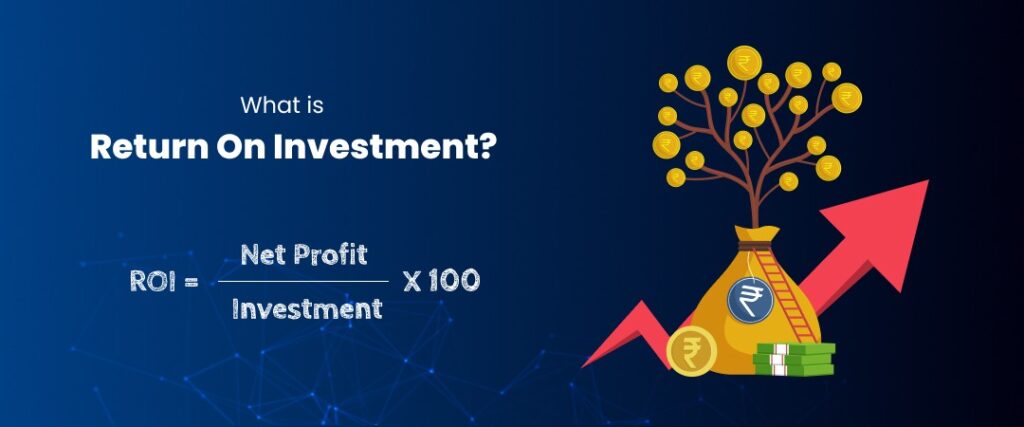
ROI (%) = [(Total Benefits – Total Costs) / Total Costs] × 100
But the real value comes from how you interpret and apply it.
1. Identify All the Costs
Start by calculating the total investment required to develop and maintain your custom software. This includes:
- Development costs: Design, coding, testing, and integration.
- Implementation costs: Training employees, data migration, and system setup.
- Maintenance costs: Updates, security patches, and future enhancements.
For example, if your software costs $80,000 to build and $10,000 yearly to maintain, your total cost in the first year is $90,000.
2. Quantify the Benefits
Next, identify the measurable benefits your software will bring. These benefits often fall into four main categories:
- Time savings: How much employee time is saved each week or month.
- Cost reduction: Lower expenses on subscriptions, third-party tools, or errors.
- Revenue growth: More leads converted, higher sales, or new revenue streams.
- Improved accuracy and efficiency: Fewer mistakes, faster workflows, and better customer experiences.
You can estimate benefits by calculating:
Time Saved × Employee Hourly Rate × Number of Employees
and adding any additional cost savings or new revenue generated.
3. Plug in the Numbers
Let’s look at a simple example:
A company invests $90,000 in a custom CRM system. After launch, the software saves employees 500 hours per month, worth $25/hour, and eliminates $2,000/month in subscription costs.
Monthly benefit: (500 × $25) + $2,000 = $14,500
Annual benefit: $14,500 × 12 = $174,000
Now, apply the ROI formula:
ROI = [(174,000 – 90,000) / 90,000] × 100 = 93.3%
That means the software nearly doubles its return in one year, and every year after that delivers even more value because the initial investment has already been covered.
4. Consider the Intangible Benefits
While numbers are powerful, some of the most important returns aren’t purely financial. Think about:
- Improved customer satisfaction and loyalty
- Stronger brand reputation
- Faster decision-making due to better data access
- Higher employee morale and retention when tools make their jobs easier
These “soft” benefits might not fit neatly into a spreadsheet, but they contribute to the overall ROI by strengthening long-term performance and growth.
5. Track and Adjust Over Time
ROI isn’t a one-time measurement, it’s an ongoing evaluation. Track your performance regularly to see if your software continues to deliver value. As your business evolves, update the system and measure new gains.
The best-performing organizations treat ROI as a living metric, not just a financial figure, but a strategy for continuous improvement.
Key takeaway:
Calculating ROI for custom software isn’t just about math, it’s about visibility. It helps you see how every dollar spent leads to measurable gains in efficiency, productivity, and long-term growth.
What Investing In A Custom Software Does For Your Business.
Productivity and Process Transformation
Custom software goes beyond automation, it redefines how work happens. Imagine software that knows your workflow so well it anticipates your next move. Instead of toggling between disconnected systems, your data flows seamlessly from one process to another. Reports generate automatically, approvals happen in seconds, and customer interactions are smoother than ever.
This transformation frees your employees to focus on strategy, creativity, and growth, not repetitive administrative work. In turn, your team becomes more engaged, motivated, and effective.
Long-Term Cost Efficiency
Off-the-shelf software may seem affordable at first, but the hidden costs add up, subscription renewals, integration patches, workflow compromises, and training on updates that may not even apply to your business.
Custom software eliminates these pain points. You own it, control it, and can update it on your own terms. The result is a long-term asset that pays for itself, often several times over.
A Lasting Competitive Edge
When every business in your industry uses the same tools, it’s hard to stand out. Custom software changes that. It allows you to build unique customer experiences, launch innovative features faster, and respond quickly to market changes. Whether it’s a smarter dashboard, a smoother checkout process, or a powerful analytics engine, your system becomes your strategic advantage.
It’s not just about technology, it’s about differentiation. The ability to do what others can’t, faster and better.
The Bottom Line
Custom software isn’t just another IT expense, it’s a growth investment. It transforms how your team works, strengthens your business operations, and positions your company for long-term success. While off-the-shelf tools get you started, custom solutions take you further, with the flexibility, scalability, and intelligence your business truly deserves.
When you calculate the real ROI in saved time, increased productivity, reduced costs, and sustained growth, the value becomes undeniable.
Don’t settle for generic tools that limit your growth. Ready to Maximize Your ROI with Custom Software?. Partner with GoCreative to build a tailor-made software solution that boosts productivity, reduces costs, and gives your business a lasting competitive edge.
Get Started Today — Book Your Free Consultation
FAQ
What does ROI mean in custom software development?
ROI measures the value your business gains from software compared to its cost, showing whether it increases productivity, saves money, or boosts revenue.
How can custom software deliver a higher ROI than off-the-shelf tools?
Custom software fits your exact processes, reducing inefficiencies and saving time, unlike off-the-shelf tools, which are more generic.
How long does it take to see ROI from custom software?
Most businesses start seeing returns within 6 to 12 months, with benefits growing over time as the software is fully adopted.
How is ROI calculated for software investments?
ROI (%) = [(Total Benefits – Total Costs) / Total Costs] × 100. Benefits include cost savings, time saved, and efficiency gains.
What types of businesses benefit most from custom software?
Businesses with unique workflows, multiple systems, or growth challenges, such as logistics, retail, healthcare, and finance, see the highest ROI.
Is custom software worth the higher upfront cost?
Yes. While initially more expensive, it eliminates ongoing fees, improves efficiency, and delivers long-term value.
What are the hidden benefits of custom software that impact ROI?
It boosts employee satisfaction, customer loyalty, decision-making speed, and brand reputation.
Can small businesses achieve good ROI from custom software?
Absolutely. Tailored solutions save time, reduce errors, and improve customer experience, often paying for themselves quickly.
How can I estimate the ROI of a custom software project before development?
Analyze current inefficiencies and costs, then calculate potential savings and productivity gains.
What’s the next step if I want to invest in custom software?
Start with a consultation and ROI assessment to ensure your investment is strategic and delivers measurable results.