In the fast-paced digital world, customers have become more demanding than ever. They want instant answers, smooth interactions, and experiences that feel personal and effortless. Businesses that fail to meet these expectations often lose potential customers to competitors that can deliver faster and smarter.
Enter AI chatbots — intelligent virtual assistants capable of engaging customers in natural, human-like conversations. What started as simple response systems has evolved into a powerful tool for driving sales, building relationships, and improving customer experience.
From automating lead generation to offering real-time support, AI chatbots have become an indispensable part of modern business operations. Let’s explore everything you need to know about AI chatbots.
The Growing Importance of AI Chatbots
Artificial Intelligence (AI) is transforming how businesses operate, and chatbots are at the center of this transformation. These digital assistants use machine learning and natural language processing (NLP) to understand, interpret, and respond to human language. Unlike traditional chat systems that rely on predefined scripts, modern AI chatbots can analyze customer intent, learn from past interactions, and provide responses that feel natural and relevant.
The growing importance of AI chatbots stems from three key trends:
- The need for instant communication: In a world where customers expect answers in seconds, waiting hours for an email reply is no longer acceptable.
- The rise of personalization: Customers prefer experiences that align with their needs, preferences, and behavior, something AI chatbots can easily adapt to.
- Scalability demands: Businesses serving hundreds or thousands of customers daily need a solution that can handle multiple conversations simultaneously without compromising quality.
According to recent reports, over 60% of consumers already prefer engaging with chatbots for quick interactions, and 80% of businesses plan to use chatbots by 2027. This shift highlights that chatbots are no longer optional, they are becoming a strategic necessity for business growth and customer satisfaction.
AI chatbots don’t just make communication faster; they make it smarter, more consistent, and available 24/7, giving businesses a competitive edge in customer engagement.
The Benefits of AI Chatbots for Sales Teams
For sales teams, time is money. Every minute spent chasing unqualified leads or handling repetitive queries is a minute lost on potential conversions. AI chatbots bridge this gap by automating routine tasks and optimizing the sales process at every stage.
Instant Lead Engagement
When a visitor lands on your website, the first few seconds determine whether they stay or leave. AI chatbots immediately greet visitors, ask relevant questions, and engage them before they lose interest. This proactive approach increases the likelihood of turning visitors into leads.
Automated Lead Qualification
Not every lead is worth pursuing. Chatbots can qualify leads by asking intelligent questions about their goals, budget, or project needs. This helps sales teams prioritize high-quality prospects, saving time and improving conversion rates.
Personalized Recommendations
Chatbots can analyze customer behavior, purchase history, and browsing activity to suggest tailored products or services. This level of personalization makes customers feel understood and increases the chances of a sale.
Enhanced Productivity and Efficiency
By handling repetitive conversations and FAQs, chatbots free up sales representatives to focus on high-value tasks like closing deals and nurturing relationships.
24/7 Sales Availability
Even after business hours, AI chatbots continue working. They answer questions, capture leads, and even schedule follow-up calls, ensuring that sales never stop.
Data-Driven Insights
Every interaction between a chatbot and a customer generates valuable data. Sales teams can analyze this data to understand customer pain points, objections, and buying behavior, insights that help refine sales strategies.
In essence, AI chatbots act as an extra team member, one that works tirelessly, never misses a lead, and continuously improves performance with every interaction.
The Practical Applications of AI Chatbots in Sales
AI chatbots are no longer futuristic concepts; they are already driving measurable results in sales departments across industries. Their practical applications are diverse, supporting both B2B and B2C businesses.
Lead Generation and Qualification
In today’s digital-first economy, businesses are racing to capture leads faster and AI chatbots are leading the way. These intelligent assistants don’t wait for customers to fill out forms or send emails; they initiate real-time conversations that turn casual visitors into potential buyers.
The real power, however, lies in lead qualification. Using natural language processing (NLP), chatbots can detect buying intent and categorize leads as high or low priority. Hot leads are passed to the sales team instantly, while others are nurtured through helpful content, demos, or follow-ups until they’re ready to convert.
Appointment Scheduling and Demos
Gone are the days of endless email exchanges just to schedule a meeting or product demo. With AI-powered chatbots, businesses can now automate the entire scheduling process, making it faster, simpler, and completely frictionless for both the customer and the sales team.
Modern chatbots integrate seamlessly with popular calendar systems like Google Calendar, Outlook, or Calendly, allowing them to instantly display available time slots and let users pick the one that works best. Once the customer confirms, the chatbot automatically books the meeting, sends confirmation details, and even provides follow-up reminders as the date approaches, all without any human intervention.
This not only saves time but also prevents scheduling conflicts and missed opportunities. Customers appreciate the instant convenience, while sales teams benefit from having their calendars filled with qualified prospects ready to talk.
Nurturing Prospects and Following Up
Converting a lead doesn’t always happen instantly. Many customers need time, reassurance, or more information before making a decision. This is where AI chatbots excel at nurturing prospects and maintaining consistent engagement long after the initial interaction.
Instead of leaving potential customers unattended, chatbots can automatically follow up with personalized messages based on previous behavior. For example, if a visitor browsed a product but didn’t complete the purchase, the chatbot can send a friendly reminder or offer a discount to encourage action. If someone downloaded a guide or attended a webinar, the chatbot can follow up with related content or ask if they’d like to schedule a consultation.
Handling Sales Objections
One of the toughest challenges in sales is handling customer objections, questions or doubts that slow down or block a potential purchase. AI chatbots can play a powerful role here by responding instantly and confidently to common concerns about pricing, features, delivery times, or product compatibility.
Because chatbots can be trained on a company’s sales data, FAQs, and product information, they’re able to provide accurate, consistent, and persuasive responses at any hour of the day. For instance, if a prospect hesitates over price, the chatbot might highlight a product’s unique value, suggest a lower-cost alternative, or even offer a limited-time discount. If a customer is unsure about delivery or warranty, it can instantly share relevant policies or testimonials to build trust.
Post-Sale Engagement and Upselling
The customer journey doesn’t end once a sale is made. In many ways, that’s where the real relationship begins. AI chatbots play a vital role in post-sale engagement, helping businesses maintain meaningful contact with customers, gather insights, and encourage repeat purchases.
After a transaction, chatbots can automatically send thank-you messages that make customers feel appreciated and valued. This small gesture goes a long way in building trust and loyalty. From there, the chatbot can take things a step further by requesting feedback or product reviews, allowing businesses to identify satisfaction levels, fix issues quickly, and improve their overall service experience.
Beyond engagement, chatbots can also act as powerful upselling and cross-selling tools. By analyzing past purchases or browsing history, they can recommend complementary products, upgrades, or extended warranties. For instance, if a customer buys a smartphone, the chatbot might suggest a matching case, wireless earbuds, or an insurance plan. If someone subscribes to a basic software plan, it can highlight the benefits of upgrading to a premium tier.
Multichannel Sales Support
Today’s customers expect convenience and consistency, no matter where they choose to interact with a brand. That’s why AI chatbots are becoming essential for multichannel sales support, seamlessly engaging customers across multiple platforms such as websites, WhatsApp, Facebook Messenger, Instagram, and even email or SMS.
Instead of limiting communication to one channel, chatbots allow businesses to maintain a unified presence everywhere their customers are. Whether a shopper asks a question through social media or visits your website for more details, the chatbot ensures the experience remains consistent with the same tone, accuracy, and speed of response.
AI Chatbots in Customer Experience.

While chatbots play a critical role in boosting sales, their impact on customer experience (CX) is equally profound. Today’s customers value brands that are responsive, reliable, and easy to reach, and AI chatbots deliver exactly that.
Round-the-Clock Support
Unlike human agents, chatbots don’t take breaks or vacations. They operate 24/7, providing immediate responses to inquiries regardless of time zone. This constant availability builds trust and satisfaction.
Fast, Accurate, and Personalized Interactions
AI chatbots can pull up user data from past interactions to personalize responses. For example, they can greet customers by name, remember preferences, and offer recommendations based on previous purchases. This creates a seamless, human-like experience that enhances brand loyalty.
Multilingual Communication
With customers engaging from all over the world, chatbots can communicate in multiple languages, breaking down barriers and expanding your business reach globally.
Consistency in Service Quality
Unlike human agents who may vary in tone or accuracy, chatbots deliver consistent, brand-aligned communication. This ensures that every customer interaction meets your company’s quality standards.
Emotionally Intelligent Responses
Advanced AI models can detect user sentiment, understanding when a customer is frustrated or pleased, and adapt their tone accordingly. This emotional intelligence adds empathy to digital interactions.
Valuable Customer Insights
Every chat provides insights into customer pain points, preferences, and behavior patterns. Businesses can use this data to refine their customer journey, improve products, and develop more effective marketing strategies.
The impact of AI chatbots on customer experience is clear: they make interactions smoother, faster, and more human, without requiring constant human supervision.
AI Chatbots: Scaling Customer Support Like Never Before
One of the most remarkable advantages of AI chatbots is their unmatched scalability. While a human support team can only handle a few conversations at once, AI chatbots can process up to 5,000 customer queries per second without missing a beat. Unlike human agents, AI doesn’t get tired, stressed, or distracted. It performs consistently, no matter the time of day or the volume of requests.
This capability makes chatbots indispensable for businesses that experience high customer interaction volumes, especially in industries like e-commerce, banking, telecommunications, and travel, where peak hours or promotional periods can trigger massive surges in inquiries.
When designed properly, chatbots ensure that every customer, whether one or five thousand receives instant responses and consistent service quality. This not only improves efficiency but also boosts customer satisfaction, as users don’t have to wait in long queues for simple queries.
To fully leverage the scalability of AI chatbots, businesses should:
- Deploy chatbots during high-traffic periods such as sales events, product launches, or customer onboarding campaigns. This helps reduce pressure on human agents while maintaining a seamless experience for customers.
- Use chatbot analytics and conversation data to track patterns in customer interactions. These insights can reveal peak activity times, frequent pain points, and opportunities to improve automated responses.
- Host chatbot systems on scalable cloud infrastructure, ensuring they can adapt in real time to fluctuating customer demand without lag or downtime.
- Integrate AI chatbots with CRM platforms, enabling them to access real-time customer information and provide more personalized support at scale.
In essence, AI chatbots give businesses the ability to serve more customers, faster and smarter, while keeping operational costs under control. As digital engagement grows, scalability isn’t just a convenience, it’s a competitive advantage.
AI Chatbots Boost Engagement Rates By Up To 80%.
Customer engagement is at the heart of every successful business. It’s what keeps users coming back, builds trust, and turns one-time buyers into loyal customers. Studies show that AI chatbots can increase engagement rates by up to 80%, making them one of the most powerful tools for improving how customers interact with a brand.
Unlike static websites or traditional communication channels, AI chatbots create dynamic, two-way conversations that hold customers’ attention. They don’t just respond, they guide, recommend, and assist in real time. Whether it’s helping a shopper find the right product, walking a user through a process, or simply offering quick answers, chatbots keep users active and connected longer.
Businesses using AI-powered chat tools often see stronger engagement because chatbots offer what modern customers crave, instant, personalized, and interactive experiences. The more relevant and responsive the interaction, the more likely a customer is to continue engaging with the brand.
To further amplify engagement, companies can:
- Use AI to personalize every interaction: Chatbots can analyze user data and past behavior to tailor messages, product suggestions, and responses that feel uniquely relevant to each customer. This sense of personalization fosters stronger emotional connections and makes customers feel understood.
- Incorporate gamification features: Adding small, fun elements like quizzes, mini-challenges, or interactive recommendations keeps conversations fresh and engaging. Gamification taps into human curiosity and reward systems, encouraging customers to stay longer and interact more.
- Provide exclusive chatbot-only offers or discounts: Rewarding users who engage through the chatbot gives customers a reason to interact again and again. This strategy not only drives conversions but also positions the chatbot as a go-to source for value and rewards.
- Leverage chatbots for feedback collection: Instead of traditional surveys, chatbots can engage customers in conversational feedback sessions, increasing response rates and providing richer insights.
Ultimately, AI chatbots transform customer engagement from passive browsing into active participation. By creating more meaningful and responsive interactions, businesses can deepen relationships, strengthen loyalty, and stand out in a competitive digital landscape.
Why Businesses Can’t Ignore Chatbots
In a competitive business environment, time and customer attention are invaluable. AI chatbots provide a perfect solution to both, offering speed, personalization, and scalability.
They help businesses engage leads instantly, provide 24/7 customer support without inflating costs, improve conversion rates through personalization, gather data that drives smarter business decisions, and strengthen relationships through post-sale communication.
By combining automation with human-like intelligence, chatbots transform the way businesses connect with customers. They are not replacing human teams; they are enhancing their effectiveness, enabling people to focus on creativity, strategy, and empathy.
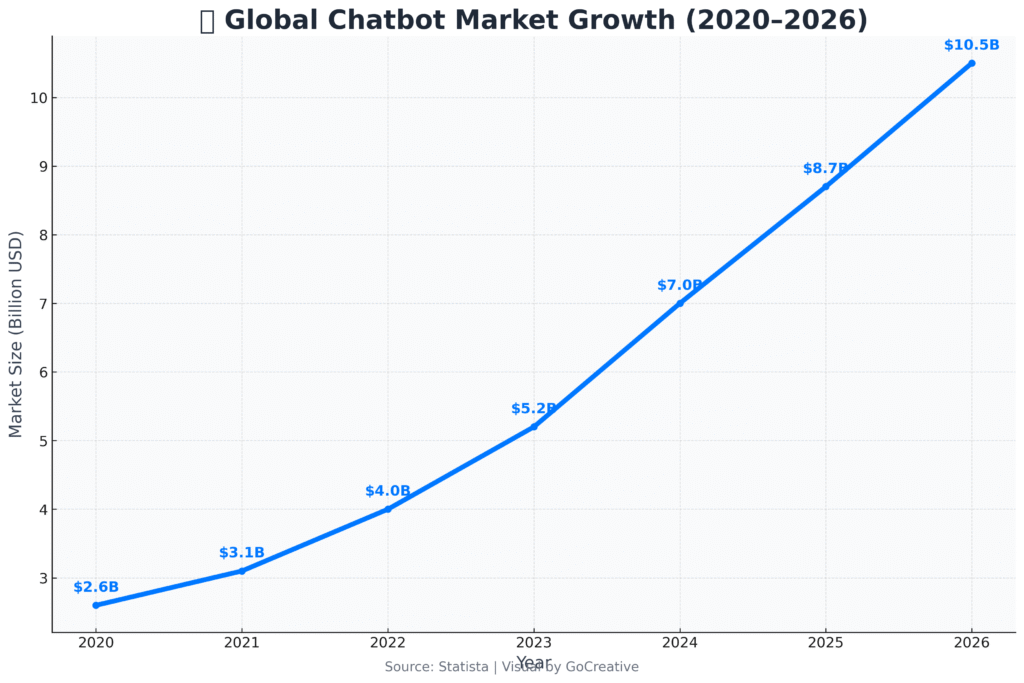
The global chatbot market is expected to reach $10.5 billion by 2026
The chatbot industry is experiencing rapid growth. As companies continue to invest in AI, the technology will only become more intelligent and intuitive, leading to richer and more seamless customer experiences.
Businesses should:
- Keep up with emerging chatbot innovations and evolving customer expectations.
- Adopt flexible AI solutions that can scale alongside business growth.
- Continuously enhance and refine chatbot features to maintain a competitive edge.
The Future Of AI Chatbots
As technology continues to evolve, AI chatbots are becoming more than just digital assistants. They’re transforming into strategic business partners. The next wave of chatbot innovation will go far beyond answering simple questions or handling basic transactions. Instead, they’ll play a deeper role in predicting customer behavior, personalizing experiences, and driving sales growth across industries.
Future chatbots will leverage advanced generative AI and emotional intelligence (EI) to create conversations that feel almost human. They’ll be able to detect tone, sentiment, and intent, responding not just with information, but with empathy. Imagine a chatbot that senses frustration and adjusts its tone to sound more reassuring, or one that recognizes excitement and recommends add-ons that complement the mood.
In the sales world, AI chatbots will become smarter revenue drivers, capable of analyzing purchasing patterns, upselling in real time, and predicting which prospects are most likely to convert. They’ll work hand-in-hand with CRM systems and predictive analytics tools, giving sales teams actionable insights and helping them close deals faster.
For customer experience, the focus will shift toward hyper-personalization. Chatbots will remember past interactions, preferences, and pain points allowing them to deliver responses that feel individually tailored. They’ll be able to continue a conversation started on one platform (like Instagram or WhatsApp) seamlessly on another (like a website chat), ensuring customers never have to repeat themselves.
Moreover, the integration of voice-based chatbots and AR/VR interfaces will redefine how people interact with brands. Voice AI assistants will enable more natural, hands-free interactions, while virtual chatbots in immersive environments could guide customers through 3D product demos or virtual showrooms.
Businesses that invest early in these advancements will gain a competitive edge, as chatbots evolve from simple automation tools into powerful engines of customer engagement and revenue generation.
Ultimately, the future of AI chatbots is about creating seamless, human-like experiences at scale — where technology doesn’t just assist customers but understands them. Brands that embrace this evolution will not only enhance customer satisfaction but also unlock new levels of efficiency, loyalty, and growth.
Ready to transform your business with AI chatbots?
At GoCreative, we specialize in developing intelligent AI chatbots tailored to your brand’s goals. Whether it’s improving sales, automating support, or enhancing customer engagement.
We design chatbots that understand your customers, respond intelligently, and help your business grow faster.
🚀 Let’s build smarter conversations together.
Visit gocreative.sbs